Table of Contents
ToggleUS Escalates Conflict With Anthropic and Claude AI Amid National Security Dispute
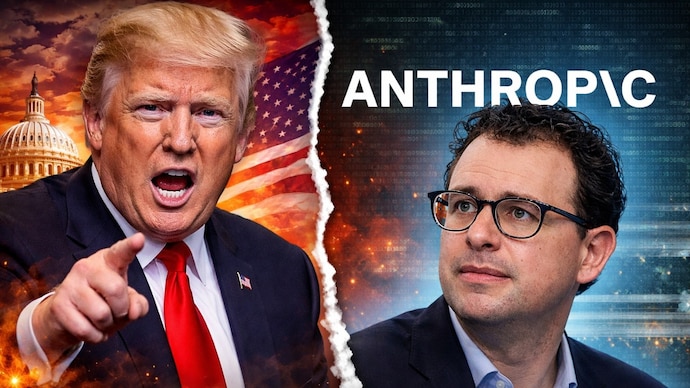
In a surprising and high-profile move just days before the United States’ escalating conflict with Iran, the Trump administration intensified its confrontation with Anthropic, the artificial intelligence company behind the advanced AI model Claude. What is unfolding is not a traditional battlefield conflict, but a strategic clash over technology, ethics, and national security.
In a dramatic turn, the U.S. government has banned federal agencies from using Claude and labelled Anthropic a national security “supply-chain risk” — a designation usually reserved for foreign adversaries. This conflict highlights deep tensions between private AI firms and government defense priorities at a time when artificial intelligence is increasingly central to military and civilian systems alike.
From Negotiations to National Security Label
The confrontation between Anthropic and the U.S. government built over several weeks of negotiations. The Department of War (which includes the Pentagon) and the Trump administration pressed Anthropic to grant the military unrestricted access to its Claude AI model for all lawful uses, including fully autonomous weapon systems and mass surveillance operations. Anthropic resisted these demands, arguing that current AI technologies are not reliable enough for unsupervised lethal use, and that mass domestic surveillance of U.S. citizens is ethically and legally problematic.
When these negotiations reached an impasse, President Donald Trump took the extraordinary step of ordering all federal agencies to immediately cease using Anthropic’s technology and instructed Defense Secretary Pete Hegseth to classify the company as a “supply chain risk to national security.” This designation is significant: it effectively forbids military contractors and any federal partners from continuing commercial ties with Anthropic — a restriction that could impact millions of dollars in contracts and undermine the company’s future prospects.
What Does the “Supply Chain Risk” Designation Mean?
A supply chain risk label is normally applied to companies tied to foreign adversaries — for example, major Chinese tech firms — on the basis that their technology could be exploited to harm U.S. interests. Applying this designation to Anthropic, an American-based AI company, is historically unprecedented and has drawn sharp criticism from industry experts and observers.
Under this designation:
-
Federal agencies — including the Department of War — must stop using Anthropic’s technology within six months.
-
Military contractors are restricted from engaging in commercial activity with Anthropic.
-
Existing government contracts, such as a roughly $200 million Pentagon contract, are effectively terminated or cannot be renewed.
The move could ripple through the defense ecosystem, forcing major contractors and cloud partners to reconsider their reliance on Claude AI for operations, support, and planning.
Anthropic’s Ethical Stance and Legal Pushback
Anthropic has publicly defended its position, arguing that the insistence on ethical guardrails — limitations on autonomous weapons and mass surveillance — is rooted in responsible AI development. The company has stated that historical usage of Claude with the U.S. military did not involve such prohibited applications, but it still refused to eliminate these safeguards going forward.
Moreover, Anthropic has vowed to challenge the “supply chain risk” designation in court, calling it legally unsound and unprecedented for a domestic company. The firm has maintained that the legal designation, under U.S. law, should not extend to its broader commercial use outside of Department of War contracts. According to the company, individual and commercial customers remain unaffected in their access to Claude’s AI services.
While Anthropic continues to argue its case, the legal battle is expected to be complex because the dispute touches on national security law, federal contracting procedures, AI ethics, and technological autonomy.
Wider Implications for AI and National Security
This clash is not just a contractual disagreement — it is emblematic of how governments and private AI developers are grappling with the limits of artificial intelligence in military and surveillance contexts. The administration’s rhetoric has emphasized that AI tools must be available for all “lawful purposes” without restrictions, including defense applications. Critics of Anthropic’s stance argue that refusing military access undermines national security, especially at a time when international tensions with rival nations are high.
Supporters of Anthropic’s position, including AI safety advocates, have argued that unchecked deployment of autonomous AI systems in war or surveillance settings carries profound ethical and civil liberties risks. They emphasize that meaningful human control must remain in place, especially in contexts involving life-and-death decisions or the monitoring of civilian populations.
Contradictions and Confusion Amid the Ban
The timing of the ban has added layers of complexity. Military systems that rely on Claude are deeply embedded in classified networks, and many operations planned well before the public dispute cannot be turned off overnight. As a result, there is a transition period during which Claude may continue to operate in certain defense applications while agencies migrate to alternative solutions. This has led to some confusion and varying reports about how immediately the ban affects military use.
The government’s six-month phase-out period is intended to avoid operational disruptions while new providers are onboarded — which could include competing AI firms willing to meet the Pentagon’s terms.
Industry Repercussions and Competitive Shifts
The government’s decision has broader implications beyond Anthropic itself. Other AI companies may face pressure to align their usage policies with defense expectations to maintain federal contracts. Reports suggest that rival firms have secured agreements with the Pentagon to provide AI tools that comply with or mirror Anthropic’s original safeguards, even as the policy dispute curtailed Anthropic’s involvement. This shift could reshape federal AI procurement strategies and influence how AI vendors approach ethical governance in relation to military use.
Additionally, the supply chain risk designation has sparked concern from industry advisors and investors who fear that future innovation could be chilled if companies feel pressured to forfeit ethical guardrails to win government business. Some argue that equating a domestic company with foreign adversaries sets a dangerous precedent for the U.S. technology sector.
Public and Political Reactions
Public reaction to the dispute reflects deep divisions in how artificial intelligence should be regulated. Some analysts view the government’s actions as a necessary measure to ensure national security interests prevail, while others see it as an overreach that undermines private sector autonomy and ethical responsibility in AI deployment.
Political commentators have also highlighted the symbolic aspects of the conflict — framing it as a broader battle over control of emerging technologies and the role of private companies in shaping national defense capabilities.
Conclusion: A Defining Moment for AI Governance
The conflict between the U.S. government and Anthropic represents a watershed moment in the evolving relationship between artificial intelligence innovators and national security policymakers. With the federal ban on Claude AI and the unprecedented supply chain risk label, questions about ethical boundaries, technological sovereignty, military demand, and civil liberties have all come to the fore.
As legal challenges unfold and federal agencies transition to alternative AI solutions, the broader tech ecosystem will be watching closely. The outcome may shape not only how AI is integrated into defense strategies but also how ethical considerations are balanced against government mandates in an era where artificial intelligence is rapidly reshaping the strategic landscape.
This episode underscores that the battles being fought today over AI may be as consequential as those on conventional battlefields — with implications that extend far into the future of technology, governance, and global power dynamics.
modastor.com modastor.com modastor.com modastor.com modastor.com modastor.com modastor.com modastor.com modastor.com modastor.com modastor.com modastor.com modastor.com modastor.com modastor.com modastor.com modastor.com modastor.com modastor.com modastor.com modastor.com modastor.com modastor.com modastor.com modastor.com modastor.com modastor.com modastor.com modastor.com modastor.com modastor.com modastor.com modastor.com modastor.com modastor.com modastor.com modastor.com modastor.com modastor.com modastor.com modastor.com modastor.com modastor.com modastor.com modastor.com modastor.com modastor.com modastor.com modastor.com modastor.com modastor.com modastor.com modastor.com modastor.com modastor.com modastor.com modastor.com modastor.com modastor.com modastor.com modastor.com modastor.com modastor.com modastor.com modastor.com modastor.com modastor.com modastor.com modastor.com modastor.com modastor.com modastor.com modastor.com modastor.com modastor.com modastor.com modastor.com modastor.com modastor.com modastor.com modastor.com modastor.com modastor.com modastor.com modastor.com modastor.com modastor.com modastor.com modastor.com modastor.com modastor.com modastor.com modastor.com modastor.com modastor.com modastor.com modastor.com modastor.com modastor.com modastor.com modastor.com modastor.com modastor.com modastor.com modastor.com modastor.com modastor.com modastor.com modastor.com modastor.com modastor.com modastor.com modastor.com modastor.com modastor.com modastor.com modastor.com modastor.com modastor.com modastor.com modastor.com modastor.com modastor.com modastor.com modastor.com modastor.com modastor.com modastor.com modastor.com modastor.com modastor.com modastor.com modastor.com modastor.com modastor.com modastor.com modastor.com modastor.com modastor.com modastor.com modastor.com modastor.com modastor.com modastor.com modastor.com modastor.com modastor.com modastor.com modastor.com modastor.com modastor.com modastor.com modastor.com modastor.com modastor.com modastor.com modastor.com modastor.com modastor.com modastor.com modastor.com modastor.com modastor.com modastor.com modastor.com modastor.com modastor.com