India’s security environment has always been shaped by its volatile western frontier, particularly the Line of Control (LoC) with Pakistan. In May 2024, the Indian Army launched Operation Sindoor, a military offensive in retaliation to the deadly Pahalgam terrorist attack in Jammu and Kashmir. While many initially assumed the operation concluded quickly, Army Chief General Upendra Dwivedi recently clarified that the offensive continued well beyond May 10 and remains central to India’s ongoing security strategy.
This statement underscores two important realities: the prolonged nature of counterterrorism efforts and the evolving challenges posed by Pakistan-backed infiltration attempts.
Background of Operation Sindoor
On May 7, 2024, terrorists carried out a brutal attack in Pahalgam, Jammu and Kashmir, killing several security personnel and civilians. India’s military response was swift. Operation Sindoor was launched as a targeted offensive aimed at neutralizing terrorist camps, thwarting infiltration attempts, and dismantling Pakistan-backed terror infrastructure across the LoC.
The operation reflected India’s policy of “zero tolerance” toward cross-border terrorism. It also showcased the ability of the Indian armed forces to conduct coordinated, high-intensity actions across difficult terrains under tight timelines.
General Dwivedi’s Clarification
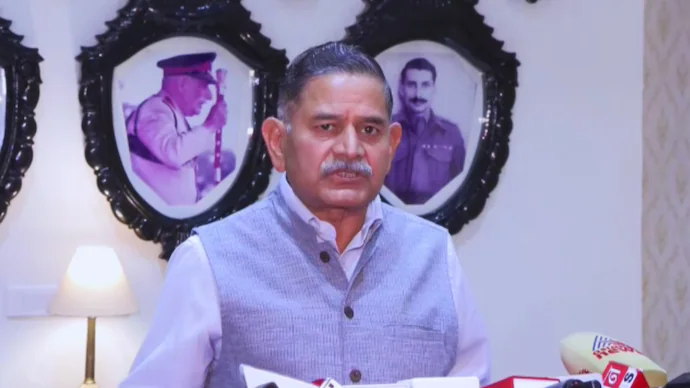
At a recent book launch event in New Delhi, General Dwivedi revealed that the assumption of Operation Sindoor concluding by May 10 was incorrect.
“You may be thinking that on May 10, the war finished; no, because it continued for a long time. So many decisions had to be taken, and beyond that, of course, it will be difficult for me to share here,” he remarked.
This statement makes it clear that military operations in Jammu and Kashmir cannot be limited to a few days of active combat. Instead, they require extended monitoring, follow-up strikes, intelligence gathering, and coordination across agencies.
appkods.co | mmake1m.com | holixservices.com
hemazhibo.net
The Continuing Challenge of Infiltration
One of the Army Chief’s key points was that the impact of Operation Sindoor on the LoC situation is still too early to assess. Despite the operation’s successes, infiltration attempts by Pakistan-based groups have not ceased.
He noted:
-
State-sponsored terrorism has not ended.
-
Infiltration attempts are still frequent.
-
While many terrorists have been killed, some continue to slip through.
This highlights the persistent asymmetric warfare that India faces, where terrorist groups backed by Pakistan’s security establishment use the porous LoC to infiltrate. Unlike conventional wars, this form of conflict is continuous and unpredictable.
Importance of Synergy in the Armed Forces
General Dwivedi emphasized the synergy among the three armed services during Operation Sindoor, describing their movements as a “rhythmic wave” where everyone was in sync.
This kind of coordination is vital in modern conflict for several reasons:
-
Complex Terrain: Operations in Jammu and Kashmir require ground, air, and surveillance support simultaneously.
-
Precision Targeting: Coordinated strikes minimize collateral damage and maximize effectiveness.
-
Rapid Response: Seamless integration ensures quick adaptation to changing situations.
This synergy is not just operational—it represents India’s gradual shift toward theaterisation.
Theaterisation: A Unified Command for Future Wars
General Dwivedi was categorical about the inevitability of theaterisation, which involves integrating the Army, Navy, and Air Force under a unified command structure.
He explained:
-
Modern warfare requires multiple agencies—military, cyber, space, and civilian.
-
Without a single commander, coordination can become fragmented.
-
Theaterisation ensures unity of command, faster decision-making, and more efficient use of resources.
While some senior officials from other services have expressed reservations, the Army Chief’s clarity reflects the direction in which India’s defence doctrine is headed. In future conflicts, India will likely rely on joint commands that can seamlessly manage operations across land, air, sea, cyber, and space domains.
GST Reforms and Defence Modernisation
Beyond the battlefield, General Dwivedi also addressed an important aspect of national security—defence modernisation through economic reforms.
He welcomed the government’s decision to reduce GST on drones from 18% to 5%, calling it a game-changer for defence procurement.
Key benefits include:
-
Large-scale procurement of drones for surveillance and combat roles.
-
Boost to defence corridors, where domestic and global firms invest in military technology.
-
Greater participation from MSMEs and start-ups, which often drive innovation in unmanned systems and AI.
This reform reflects how economic decisions directly impact India’s military readiness. By lowering the cost of advanced technologies, India can strengthen its defence ecosystem and reduce dependence on foreign imports.
Lessons from Operation Sindoor
Operation Sindoor offers several lessons for India’s ongoing counterterrorism strategy:
-
Terrorism is an ongoing war, not a one-time battle. Even after major offensives, Pakistan-backed groups regroup and attempt infiltration.
-
Extended operations are necessary. Unlike conventional wars with clear timelines, counterterrorism requires prolonged engagement.
-
Synergy is critical. Joint efforts of the Army, Navy, and Air Force ensure precision and efficiency.
-
Technology matters. Drones, AI-driven surveillance, and cyber capabilities will play an increasingly important role.
-
Policy reforms strengthen the military. Economic decisions like GST reduction directly enhance defence preparedness.
Broader Implications for India-Pakistan Relations
Operation Sindoor also has a strategic message. India has demonstrated that terrorism will invite swift and decisive retaliation. However, General Dwivedi’s comments show that this is not a finite conflict—it is a long-term challenge.
Pakistan’s continued use of terrorism as state policy complicates peace prospects. Until infiltration stops, the LoC will remain volatile, requiring India to maintain a constant state of readiness.
At the same time, India’s push toward theaterisation and modernisation suggests that the country is preparing for future wars that will be multi-domain and technology-driven.
Conclusion
General Upendra Dwivedi’s remarks remind us that the war with Pakistan-backed terrorism did not end on May 10. Operation Sindoor was not a short-lived military response but part of a prolonged campaign against infiltration and cross-border terrorism.
By stressing on continued vigilance, synergy among the armed forces, theaterisation, and defence modernisation, the Army Chief laid out a roadmap for India’s security strategy.
As India looks ahead, the lessons of Operation Sindoor will shape not just military tactics but also long-term national defence planning. The challenges along the LoC remain, but with unified command structures, modern technology, and economic reforms supporting the armed forces, India is steadily building the capability to face them head-on.