Thousands of people gathered in Chattogram, Bangladesh, to demand the speedy implementation of the China-backed Teesta River Master Plan. What began as a local protest for better water management has now caught the attention of both New Delhi and international observers, as the issue involves not just development — but also geopolitics.
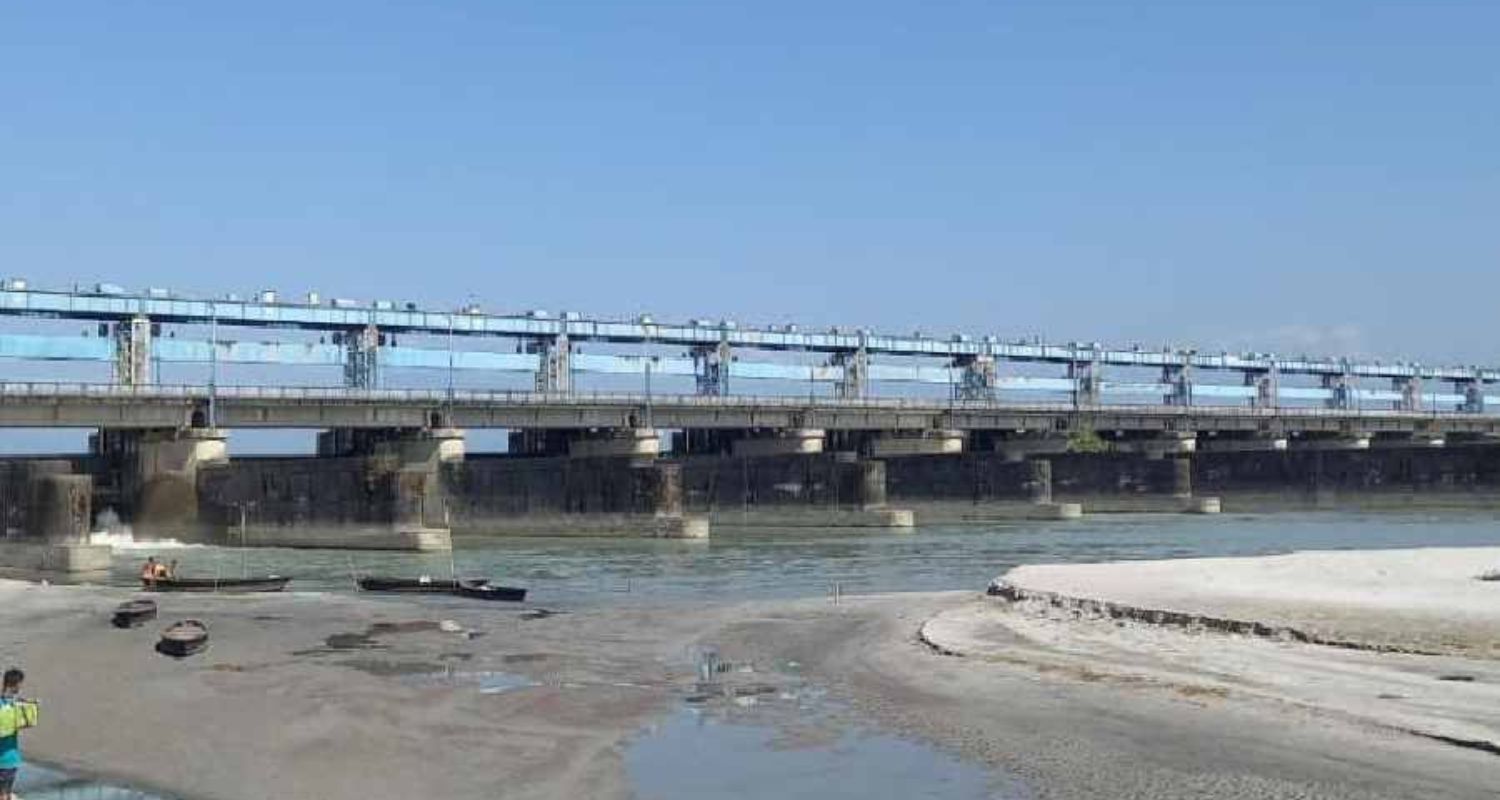
The Teesta River, which flows from India into Bangladesh, has long been a source of tension between the two neighbours. Now, with China stepping in to fund and design a massive water management project on the river, India sees red flags, fearing potential strategic and security implications close to one of its most sensitive regions.
What Is the Teesta River Master Plan?
The Teesta River originates in the Himalayas, flows through the Indian state of Sikkim and northern West Bengal, and then enters Bangladesh before joining the Brahmaputra River.
The Teesta River Master Plan, proposed by China’s Power Construction Corporation (PowerChina), aims to:
-
Build embankments and reservoirs to prevent floods and droughts.
-
Improve irrigation systems for agriculture.
-
Develop surrounding areas for industrial and economic growth.
The estimated cost of the project is around $1 billion, which China has offered to fund as part of its Belt and Road Initiative (BRI) — a massive global infrastructure plan.
coxcheer.com | lawnmower-care.com | lickspittles.com
coralunallc.com | jamierpoker.com
Why Are People Protesting in Bangladesh?
In Chattogram, thousands took to the streets, demanding that the Bangladesh government move forward with the Chinese proposal. Protesters argued that the project would:
-
Provide stable irrigation for thousands of farmers.
-
Prevent seasonal flooding that damages crops and homes.
-
Boost economic growth in northern Bangladesh.
Many local residents feel that India has failed to finalize the long-pending Teesta water-sharing agreement, which has been under discussion for over a decade.
“China is willing to invest and solve our water problems. Why wait for India forever?” one protester reportedly said during the rally.
The sentiment reflects growing public frustration in Bangladesh’s northern districts, where water shortages often affect livelihoods.
India’s Long-Delayed Teesta Deal
The Teesta water-sharing agreement between India and Bangladesh was supposed to be signed in 2011, during former Indian Prime Minister Manmohan Singh’s visit to Dhaka.
However, the deal was stalled due to opposition from West Bengal Chief Minister Mamata Banerjee, who argued that it would harm farmers in her state by reducing water availability.
Since then, India has struggled to finalize the deal, despite several rounds of talks. For Bangladesh, the Teesta issue has become a symbol of unmet expectations from its biggest neighbor.
This vacuum has now given China an entry point, offering to help manage the river with both funding and technical expertise.
Why China’s Involvement Worries India
From India’s perspective, the China-backed Teesta plan is not just an infrastructure project — it’s a strategic concern.
Here’s why:
-
Proximity to the Siliguri Corridor:
The Teesta basin lies close to the Siliguri Corridor, also known as the “Chicken’s Neck” — a narrow 22-km strip of land that connects India’s mainland to its northeastern states. Any Chinese presence near this corridor is seen as a serious security risk. -
Expanding China’s Influence in South Asia:
India fears that Beijing’s growing role in Bangladesh’s infrastructure could turn Dhaka into another strategic foothold for China, similar to its influence in Sri Lanka and Pakistan. -
Military and Intelligence Concerns:
If Chinese engineers or construction firms operate near the India-Bangladesh border, it could provide strategic mapping and data access to Beijing. -
Challenge to India’s Traditional Role:
India has historically been Bangladesh’s key development partner. China’s involvement in a sensitive cross-border river system challenges India’s influence in the region.
Dhaka’s Balancing Act
The Bangladesh government, led by Prime Minister Sheikh Hasina, has tried to strike a careful balance between the two Asian powers.
Dhaka insists that the Teesta project is purely developmental and aims to improve irrigation and prevent floods — not to favor any particular country.
Officials have said that Bangladesh is still evaluating the project’s technical feasibility and environmental impact, and no final agreement has been signed yet.
However, analysts point out that Bangladesh’s growing economic reliance on China — from bridges to power plants — makes it difficult for Dhaka to fully resist Beijing’s offers.
Strategic Ripples Beyond Borders
The Teesta issue goes beyond water sharing — it’s becoming a test of influence in South Asia.
For India, it highlights how China is using economic tools to gain leverage in neighboring countries. For Bangladesh, it reflects how domestic needs and regional politics are colliding.
Experts believe that if India does not take proactive steps, it could lose ground diplomatically and strategically in one of its most important neighboring nations.
Dr. Sanjay Baru, a strategic analyst, said, “The Teesta project is not about irrigation alone. It’s a geopolitical signal. If China builds it, India’s influence in Bangladesh’s north could weaken dramatically.”
Public Opinion Divided in Bangladesh
While protesters in Chattogram are demanding the China-backed plan, not everyone in Bangladesh supports it.
Environmentalists have warned that large-scale construction on the Teesta could disrupt the river’s natural flow, harming fisheries and wetlands.
Economists also caution that heavy reliance on Chinese loans could push Bangladesh into a debt trap, similar to Sri Lanka’s financial crisis linked to Chinese-funded projects like Hambantota Port.
Some experts are calling for a trilateral framework — involving India, Bangladesh, and China — to ensure transparency and shared benefits.
What Could India Do Next?
India now faces a strategic choice. To counter China’s growing footprint, New Delhi could:
-
Fast-track the pending Teesta water-sharing deal, showing goodwill toward Dhaka.
-
Offer joint projects on river management, infrastructure, or agriculture.
-
Enhance diplomatic engagement with Bangladesh beyond water issues.
Analysts say this could help rebuild trust and prevent China from dominating the conversation in Dhaka.
The Bigger Picture: Water, Power, and Influence
The Teesta dispute is part of a broader pattern — where water, infrastructure, and influence are deeply connected.
As climate change increases pressure on South Asia’s rivers, countries are racing to secure control over water resources. For both India and China, these rivers are not just sources of water — but symbols of regional power.
The Teesta project thus stands at the crossroads of development and geopolitics — a reminder that in Asia, even rivers can become arenas of competition.
Conclusion
The protests in Bangladesh may seem like a local issue, but they carry major implications for India’s national security and regional diplomacy.
As Dhaka weighs China’s Teesta proposal, New Delhi faces the challenge of protecting its strategic interests without straining ties with a close neighbor.
In the end, how India and Bangladesh handle the Teesta question could determine the future balance of power in South Asia — one river at a time.