For years, Generation Z has been surrounded by stereotypes. They have often been described as the “smartphone generation,” accused of spending too much time on social media, following viral trends, prioritising mental health over hard work, and being disconnected from real-world issues. Millennials and older generations have frequently questioned their resilience, commitment, and attention span.
However, recent events in India have challenged many of these assumptions. During the nationwide student protests linked to concerns over NEET examination irregularities and broader issues affecting education and employment, thousands of young people—most belonging to Generation Z—mobilised both online and offline. Their organised participation, peaceful demonstrations, and innovative use of digital platforms have led many observers to reconsider long-held perceptions about this generation. The movement has drawn widespread public attention and appreciation, with many acknowledging that Gen Z is more socially aware and civically engaged than previously believed.
Rather than simply following internet trends, many young Indians demonstrated that digital fluency can also be used to organise communities, amplify public issues, and encourage civic participation. The changing perception of Gen Z reflects a broader shift in how society understands today’s youth.
Who Is Generation Z?
Generation Z generally refers to people born between the late 1990s and the early 2010s. They are the first generation to grow up with smartphones, high-speed internet, social media, streaming platforms, and instant digital communication.
Unlike previous generations that gradually adapted to technology, Gen Z has experienced digital connectivity throughout childhood and adolescence. This has influenced how they learn, communicate, consume information, and express themselves.
Their familiarity with technology has often been mistaken for superficiality. In reality, many members of Gen Z use digital tools not only for entertainment but also for education, entrepreneurship, social causes, and professional development.
The Stereotypes That Defined Gen Z
Before recent events, several stereotypes commonly shaped public opinion about Gen Z.
They were often portrayed as impatient, overly sensitive, constantly online, and unwilling to accept traditional workplace expectations. Their openness about mental health was sometimes misinterpreted as emotional weakness rather than increased awareness.
Social media humour, memes, and internet slang also contributed to the perception that Gen Z cared more about entertainment than serious issues.
While every generation develops unique cultural habits, broad stereotypes rarely capture the diversity within millions of young people.
What Changed Public Perception?
The recent student-led movement in India significantly changed how many people viewed Generation Z.
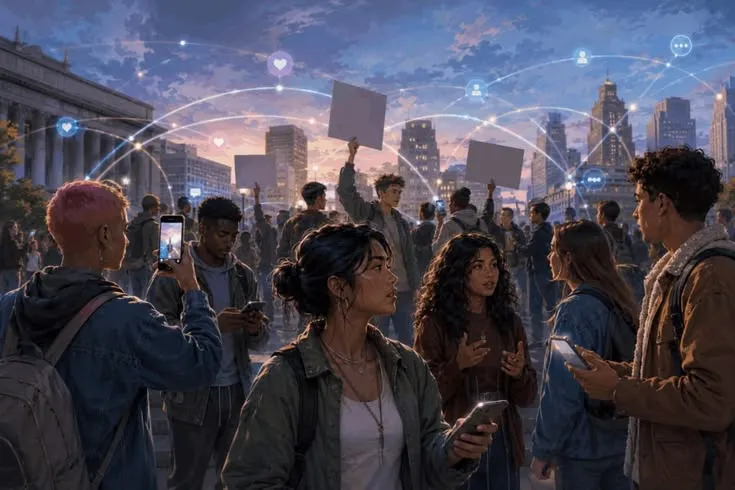
Instead of limiting their participation to online discussions, large numbers of young people organised peaceful demonstrations, created awareness campaigns, and used digital platforms to communicate their concerns about education, accountability, and employment. The movement combined on-the-ground participation with highly effective online mobilisation, allowing issues to reach millions of people across the country.
Many millennials who had previously criticised Gen Z publicly acknowledged that they had underestimated the generation’s ability to organise, communicate, and lead discussions on important public issues.
Digital Skills Became a Strength
One of the defining characteristics of Gen Z is their ability to navigate digital platforms naturally.
Rather than treating social media as simply a source of entertainment, many young people used it as a tool for information sharing, live updates, creative storytelling, fundraising, and community engagement.
Memes, short videos, humour, and visual communication became effective methods for increasing awareness among audiences who might not engage with traditional political messaging.
This style of communication reflects a different approach to activism rather than a lack of seriousness.
Mental Health Awareness Does Not Mean Weakness
Another common misconception about Gen Z involves mental health.
Compared with previous generations, Gen Z speaks more openly about anxiety, stress, burnout, and emotional well-being.
Some critics interpreted these conversations as evidence of lower resilience.
However, psychologists increasingly argue that discussing mental health encourages early intervention, reduces stigma, and supports healthier coping strategies.
Recognising emotional challenges does not reduce determination. Instead, it can improve long-term personal and professional performance.
A Generation Shaped by Different Challenges
Every generation is influenced by the social and economic conditions in which it grows up.
Generation Z has experienced rapid technological change, global pandemics, increased academic competition, economic uncertainty, climate concerns, and evolving employment markets.
Many students face intense competition for educational opportunities while simultaneously preparing for careers in industries being transformed by automation and artificial intelligence.
These experiences have shaped their priorities differently from previous generations.
New Forms of Leadership
Leadership today looks different from traditional models.
Instead of relying solely on established institutions, many Gen Z leaders build communities through digital platforms.
They communicate directly with audiences, collaborate across geographical boundaries, and encourage participation using accessible online tools.
This decentralised style allows movements to grow quickly while involving individuals from diverse backgrounds.
Recent youth-led campaigns in India demonstrated how digital leadership can complement peaceful public participation.
The Role of Creativity in Modern Activism
One feature that distinguishes many Gen Z movements is creativity.
Humour, satire, artwork, music, memes, and internet culture have become effective communication tools.
Instead of reducing the seriousness of public concerns, creative messaging often increases visibility and encourages broader engagement.
Messages that are visually appealing and easily shareable travel rapidly across digital networks, helping issues reach wider audiences.
This communication style reflects the realities of modern media consumption.
Millennials and Gen Z Share More Than They Think
Although generational differences often receive attention, millennials and Gen Z have many shared experiences.
Both generations have lived through economic uncertainty, rapidly changing technologies, evolving workplaces, and increased global connectivity.
Millennials introduced many digital innovations that Gen Z later expanded through new communication platforms.
Rather than competing, the two generations can complement one another by combining experience with technological adaptability.
Intergenerational collaboration can strengthen workplaces, communities, and public discussions.
Why Generalisations Can Be Misleading
It is important to remember that no generation is completely uniform.
Millions of individuals belong to Generation Z, representing different regions, educational backgrounds, professions, cultures, and personal experiences.
Similarly, millennials hold diverse opinions and perspectives.
Broad labels such as “lazy,” “entitled,” or “overly sensitive” rarely describe an entire generation accurately.
Understanding people as individuals rather than stereotypes encourages more meaningful conversations.
What Businesses and Employers Can Learn
The changing perception of Gen Z also carries important lessons for employers.
Young professionals often value flexibility, continuous learning, meaningful work, technological innovation, and open communication.
Companies that recognise these priorities may improve employee engagement and attract skilled talent.
Rather than assuming younger employees lack commitment, organisations can benefit from understanding their different working styles and strengths.
Digital literacy, adaptability, creativity, and collaboration are increasingly valuable skills in modern workplaces.
The Future of Generation Z
As Generation Z enters leadership positions across business, technology, education, entrepreneurship, and public service, its influence is likely to continue growing.
Their familiarity with emerging technologies, global communication, and digital problem-solving positions them to contribute significantly to future economic and social development.
At the same time, continued dialogue between generations remains important.
Learning from each other’s experiences can create stronger institutions, healthier workplaces, and more inclusive communities.
Conclusion
For many years, Generation Z was often viewed through the lens of internet culture, viral trends, and social media habits. However, recent youth-led public engagement in India has encouraged many millennials and older generations to reassess these assumptions. By combining digital innovation with organised civic participation, Gen Z demonstrated that technology can be a powerful tool for awareness, collaboration, and social engagement.
Rather than defining an entire generation through stereotypes, it is more meaningful to recognise the diversity, creativity, and resilience that many young people bring to society. Every generation contributes differently to social progress, and the evolving story of Generation Z shows that today’s digital natives are not only shaping online conversations but also actively participating in issues that matter to their future and the future of the country.
wellnessfitgo wellnessfitgo wellnessfitgo wellnessfitgo wellnessfitgo wellnessfitgo wellnessfitgo wellnessfitgo wellnessfitgo wellnessfitgo wellnessfitgo wellnessfitgo wellnessfitgo wellnessfitgo wellnessfitgo wellnessfitgo wellnessfitgo wellnessfitgo wellnessfitgo wellnessfitgo wellnessfitgo wellnessfitgo wellnessfitgo wellnessfitgo wellnessfitgo wellnessfitgo wellnessfitgo wellnessfitgo wellnessfitgo wellnessfitgo wellnessfitgo wellnessfitgo wellnessfitgo wellnessfitgo wellnessfitgo wellnessfitgo wellnessfitgo wellnessfitgo wellnessfitgo wellnessfitgo wellnessfitgo wellnessfitgo wellnessfitgo wellnessfitgo wellnessfitgo wellnessfitgo wellnessfitgo wellnessfitgo wellnessfitgo wellnessfitgo wellnessfitgo wellnessfitgo wellnessfitgo wellnessfitgo wellnessfitgo wellnessfitgo wellnessfitgo wellnessfitgo wellnessfitgo wellnessfitgo wellnessfitgo wellnessfitgo wellnessfitgo wellnessfitgo wellnessfitgo wellnessfitgo wellnessfitgo wellnessfitgo wellnessfitgo wellnessfitgo wellnessfitgo wellnessfitgo wellnessfitgo wellnessfitgo wellnessfitgo wellnessfitgo wellnessfitgo wellnessfitgo wellnessfitgo wellnessfitgo wellnessfitgo wellnessfitgo wellnessfitgo wellnessfitgo wellnessfitgo wellnessfitgo wellnessfitgo wellnessfitgo wellnessfitgo wellnessfitgo wellnessfitgo wellnessfitgo wellnessfitgo wellnessfitgo wellnessfitgo wellnessfitgo wellnessfitgo wellnessfitgo wellnessfitgo wellnessfitgo wellnessfitgo wellnessfitgo wellnessfitgo wellnessfitgo wellnessfitgo wellnessfitgo wellnessfitgo wellnessfitgo wellnessfitgo wellnessfitgo wellnessfitgo wellnessfitgo wellnessfitgo wellnessfitgo wellnessfitgo wellnessfitgo wellnessfitgo wellnessfitgo wellnessfitgo wellnessfitgo wellnessfitgo wellnessfitgo wellnessfitgo wellnessfitgo wellnessfitgo wellnessfitgo wellnessfitgo wellnessfitgo wellnessfitgo wellnessfitgo wellnessfitgo wellnessfitgo wellnessfitgo wellnessfitgo wellnessfitgo wellnessfitgo wellnessfitgo wellnessfitgo wellnessfitgo wellnessfitgo wellnessfitgo wellnessfitgo wellnessfitgo wellnessfitgo wellnessfitgo wellnessfitgo wellnessfitgo wellnessfitgo wellnessfitgo wellnessfitgo wellnessfitgo wellnessfitgo wellnessfitgo wellnessfitgo wellnessfitgo wellnessfitgo wellnessfitgo wellnessfitgo wellnessfitgo wellnessfitgo wellnessfitgo wellnessfitgo wellnessfitgo wellnessfitgo wellnessfitgo wellnessfitgo wellnessfitgo