President Donald Trump has escalated tensions with France and the broader European Union by threatening to impose 200 percent tariffs on French wines and champagnes after French President Emmanuel Macron reportedly declined to join his controversial “Board of Peace” initiative. The move, announced in January 2026, reflects a striking blend of economic coercion and high‑stakes diplomacy as Washington pushes its own model for global conflict resolution.
What Happened: A Trade Threat Meets Diplomacy
On January 20, 2026, during remarks to reporters, President Trump said that if Macron refuses to participate in his so‑called Board of Peace, the U.S. would implement a 200 percent tariff on French wines and champagnes imported into the United States. Trump was quoted telling journalists that “nobody wants him” and “I’ll put a 200 percent tariff on his wines and champagnes, and he’ll join,” though he added that Macron “doesn’t have to join.”
The threat is not merely symbolic. France’s wine and spirits industry is deeply integrated with the U.S. market. French exports of wine and spirits to the United States reached approximately €3.8 billion in 2024, making the U.S. one of France’s most important overseas markets. A tariff of this magnitude would dramatically increase consumer prices and could substantially reduce French market share in the U.S. industry.
The Board of Peace Explained
The World’s attention is divided between this trade threat and the substantive—but controversial—initiative behind it: the Board of Peace. First announced by Trump in September 2025, the initiative was initially designed as part of a broader strategy to resolve the ongoing conflict in Gaza. Since then, the concept has evolved into a proposed global body that goes beyond its original mandate.
According to reports, invitations have been sent to about 60 countries, with leaders from nations including Russia, the United Kingdom, India, and others receiving offers to participate. Some countries, such as Morocco, Vietnam, Kazakhstan, Hungary, and Argentina, are reported to have accepted. Others, including France and some EU members, have reacted cautiously or declined, in part because of concerns over the board’s structure and its implications for the authority of the United Nations.
Under a draft charter circulated by the U.S. administration, member states that wish to maintain their seat for more than three years would be required to make a financial contribution of $1 billion. This funding is intended to support peacekeeping and conflict‑resolution activities worldwide.
France’s Response and Strategic Concerns
French officials have articulated principled objections to Trump’s initiative. According to sources close to President Macron, France does not plan to accept the invitation at this stage, arguing that the board’s mandate appears to extend beyond Gaza and could undermine established international frameworks like the UN Security Council and the existing peace architecture.
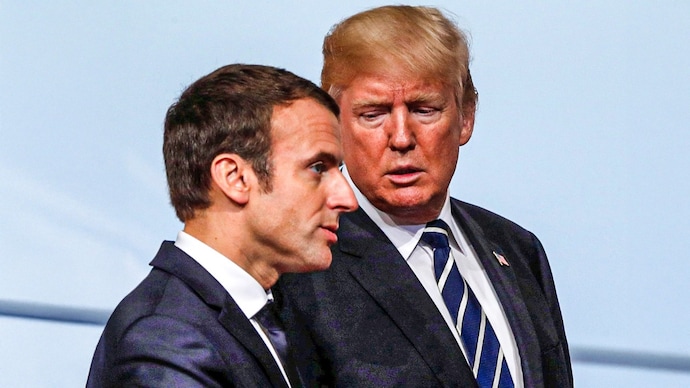
This diplomatic hesitation reflects broader concerns in Europe about the initiative’s legitimacy, scope, and leadership. Many European governments view the board’s structure—with Trump at its helm and with discretionary powers over membership and decision‑making—as potentially too closely aligned with U.S. strategic interests rather than multilateral consensus.
Tariffs as Leverage: A New Foreign Policy Tool?
The terroir of French wine has suddenly become entwined with geopolitics. Tariffs have long been used as tools of economic policy, but it is rare for them to be openly wielded as leverage in what amounts to diplomatic pressure. The threat of a 200 percent tariff is among the most severe ever floated by a leading global economy against a major partner over a diplomatic disagreement.
Experts suggest that such punitive duties could provoke retaliation from the European Union. European leaders have already hinted at counter‑measures and viewed aggressive tariff threats as “blackmail” or coercive diplomacy. These dynamics risk sparking a broader trade conflict with consequences for global markets.
Trump’s Broader Strategic Agenda
The tariff threat does not exist in isolation. It comes against the backdrop of other Trump foreign policy initiatives, including his renewed assertiveness over Greenland, which has drawn ridicule from French officials and others in Europe. France’s Foreign Ministry reportedly mocked the justification offered by the U.S. for prioritizing strategic control in the Arctic region, underscoring rising diplomatic friction.
By fusing trade policy with geopolitical strategy, Trump’s approach underscores a shift toward transactional diplomacy that prioritizes leverage and bilateral bargaining power over traditional collective frameworks. This orientation is both criticized and praised in international circles—depending on political perspective—but it undeniably upends norms of alliance management and multilateral cooperation.
Global Reactions and Risks
The international response has been mixed. Some countries have cautiously engaged with the Board of Peace concept, seeing a potential role in mediating conflicts or contributing to reconstruction efforts. Others have expressed substantial reservations about aligning with a U.S.-led body that might be perceived as overshadowing or competing with existing institutions such as the United Nations.
French and EU officials have explicitly rejected the idea that tariffs should be used as diplomatic leverage, warning that such measures would damage long‑standing economic partnerships and invite retaliatory tariffs that could escalate into a wider trade war.
Conclusion: At the Intersection of Diplomacy and Economics
President Trump’s threat to levy 200 percent tariffs on French wines and champagnes over Emmanuel Macron’s reluctance to join his Board of Peace illustrates the increasingly blurred boundaries between economic policy and geopolitics. In leveraging nation‑to‑nation trade as a means of extracting diplomatic compliance, this episode marks a significant inflection point in how global powers negotiate influence, resolve conflicts, and maintain alliances in an era of intensifying geopolitical competition.
The coming weeks and months will test whether this strategy yields the desired diplomatic outcomes—or whether it instead deepens transatlantic rifts and destabilizes established multilateral frameworks that nations have relied upon for decades.
appywleb appywleb appywleb appywleb appywleb appywleb appywleb appywleb appywleb appywleb appywleb appywleb appywleb appywleb appywleb appywleb appywleb appywleb appywleb appywleb appywleb appywleb appywleb appywleb appywleb appywleb appywleb appywleb appywleb appywleb appywleb appywleb appywleb appywleb appywleb appywleb appywleb appywleb appywleb appywleb appywleb appywleb appywleb appywleb appywleb appywleb appywleb appywleb appywleb appywleb appywleb appywleb appywleb appywleb appywleb appywleb appywleb appywleb appywleb appywleb appywleb appywleb appywleb appywleb appywleb appywleb appywleb appywleb appywleb appywleb appywleb appywleb appywleb appywleb appywleb appywleb appywleb appywleb appywleb appywleb appywleb appywleb appywleb appywleb appywleb appywleb appywleb appywleb appywleb appywleb appywleb appywleb appywleb appywleb appywleb appywleb appywleb appywleb appywleb appywleb appywleb appywleb appywleb appywleb appywleb appywleb appywleb appywleb appywleb appywleb appywleb appywleb appywleb appywleb appywleb appywleb appywleb appywleb appywleb appywleb appywleb appywleb appywleb appywleb appywleb appywleb appywleb appywleb appywleb appywleb appywleb appywleb appywleb appywleb appywleb appywleb appywleb appywleb appywleb appywleb appywleb appywleb appywleb appywleb appywleb appywleb appywleb appywleb appywleb appywleb